Locals referred to this facility as Camp “Kan-A-Nazi. This prisoner of war camp was located in the Bow Valley at the entrance to the Canadian Rocky Mountains.
Prisoner Camp in operation – 1942

In September, 1939, the Seebee-Kananaskis Internment Camp #130 was opened at the north side of Mount Barrier, a prison camp originally for civilian internees and enemy merchant seamen. Two years later, the majority of these detainees were sent to facilities in eastern Canada and the site was enlarged and fortified for use as a prisoners of war camp. The camp later held 650 prisoners of war that were mostly officers captured from the German Afrika Korps by the British Eighth Army in North Africa from late 1942 until 1946, when the camp closed.
Guard Tower – ready to shoot

The guard tower No. 8 that still exists today, like the others, was equipped with a mounted machine gun or “Bren” gun. The gun fired up to 750 rounds per minute in a 90 degree swath. Each guard was issued a rifle and ammunition when they went on duty.
Guard Tower Leftovers – as is today

During their time in detention, the prisoners engaged in numerous activities, including clearing the valley that now forms the bed of Barrier Lake. There were 26,000 prisoners of war interned in Alberta during the Second World War – more than were interned in any other province. The Colonel’s Cabin is one of the few structural reminders of this chapter in provincial history.
Remains of the Colonel’s Cabin
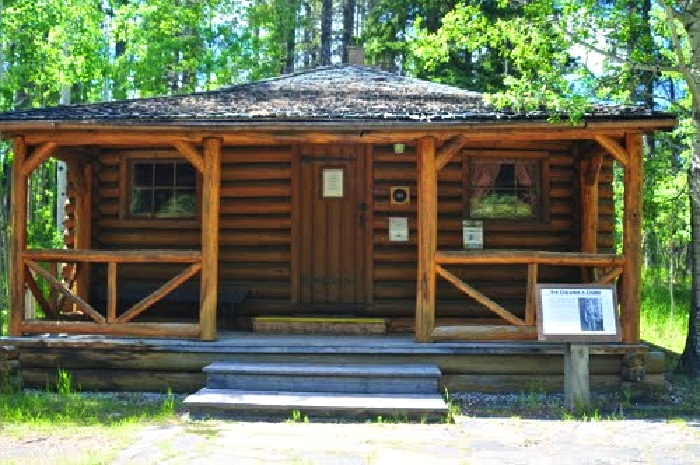
The site is at the crowded edge of rock and trees on the north side of Mount Barrier. The poplar trees are now invading the POW site. The University of Calgary has an environmental center here and the Province of Alberta, a forestry station and nature walk.
Prisoner’s playing soccer

A few tired photos show a more barren, sunburnt, windblown frost touched site that hemmed in people behind Canadian barbed wire. ‘The location is breathtaking in its beauty and grandeur’.
Rotary Plaque – Salute to the Veteran Guards

Over the main road and down a short rocky path, Barrier Lake delivers its startling color impact of Robin’s egg blue/green. The lake was not there when the prisoners were there. The prisoners felled the timber and brush below the present water line and the lake was dammed and flooded after the POW travelled the Atlantic Ocean back to war blasted Germany.
Barrier Lake with full fall colours

Perhaps Barrier Lake should be renamed Prisoners’ Lake – and yet their imprisonment was indeed a ‘barrier’ to their freedom.
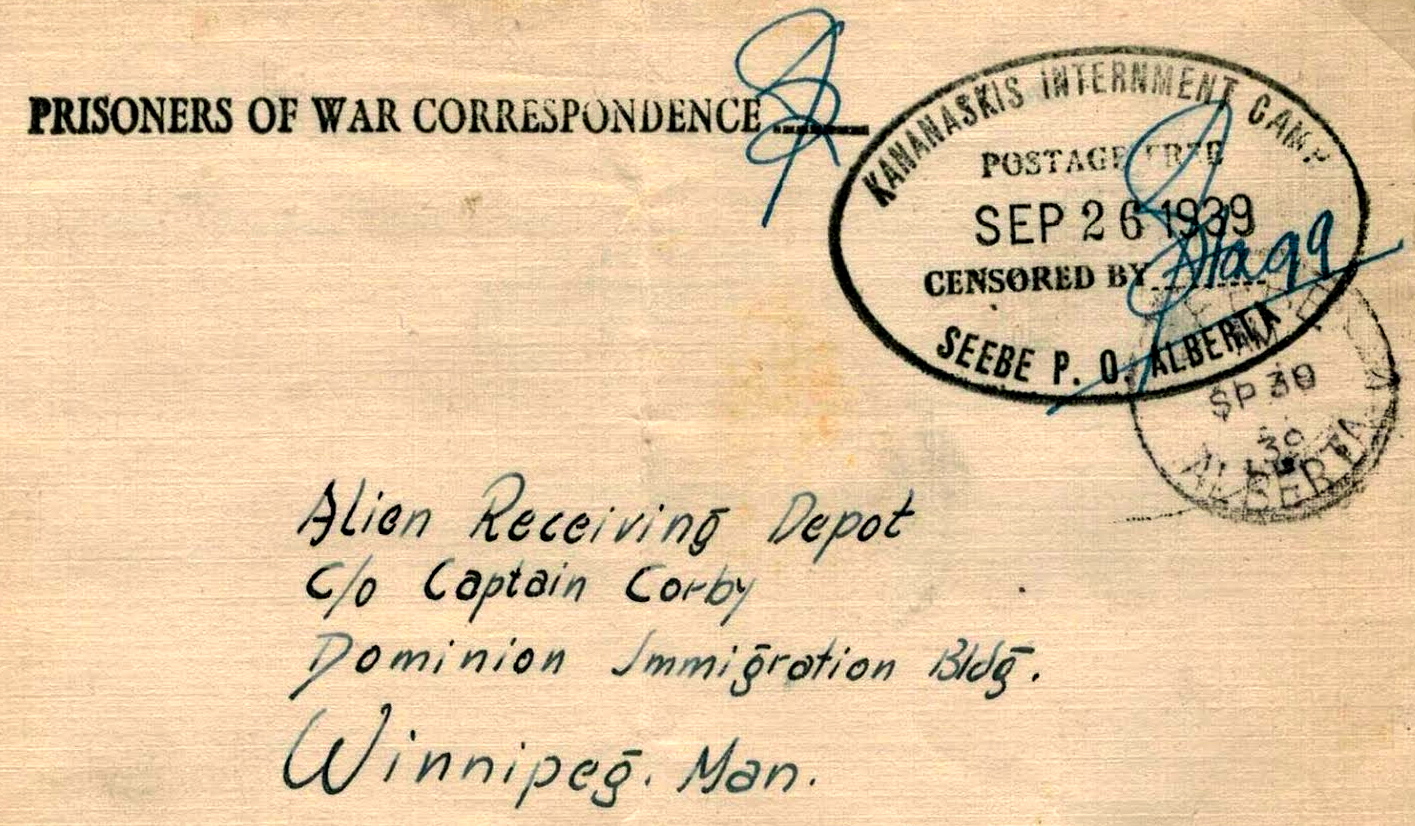
Postal History – Seebee, Ab 1939
The prisoners referred to Barrier Mountain as ‘Old Baldy’. On September 12, 1984, the Alberta Historic Sites Board renamed the mountain as ‘Old Baldy’. This was announced at a prisoner of war reunion in Wurzburg, Germany in 1996, some of the ex-prisoners had tears in their eyes.

Discover more from Discover God's Word
Subscribe to get the latest posts sent to your email.
My grandfather, Major John Westry Stagg M.C., whose signature is on the POW correspondence, served with the 4th battalion of the CEF, as well as the OC of Camp 130. I have been researching his military history, but can find very little about his time at 130. Can you enlighten me with any details?
Not much out there via google! I did post the book “Interned without Cause” by Peter Krawchuck on the page. Good links here http://heritage.canadiana.ca/ and http://www.canadaatwar.ca/index.php.
Currently I am researching the United Empire Loyalists that were part of my tree. Most settled near Kingston as I note your grandfather was from there. Good luck and if I come across anything I will let you know.
Jack B
Good morning,
My grandfather was sergeant Clarence Hodson .Who served in this camp . We have lots of photos of the camp that we would gladly share.
wow, that would be fantastic. My grandfather, Major Stagg, was the first commandant when the camp was just started. I have been researching both his WW1 military career as well as his time at camp 130
Hello Craig, just saw your post and would love to see any of your photos. My grandfather Howard Alvin Hunter was part of the veteran’s guard at the Kananaskis camp. We have a beautiful ship in a bottle that was made for him by one of the POW’s. I noticed an almost identical one displayed when I was at the site a few years ago. I would love to find out who made it.
Trish Hunter
I would be very interested in the photos of the camp, and grateful for the sharing.